

Hannah Mayree: Songs of Reclamation
Directed by Ebony Marie BaileyCast: Hannah Mayree
- United States
- Documentary
- English
- 2025
- 16:00 mins
 tweet
 share
Hannah Mayree: Songs of Reclamation
Directed by Ebony Marie Bailey
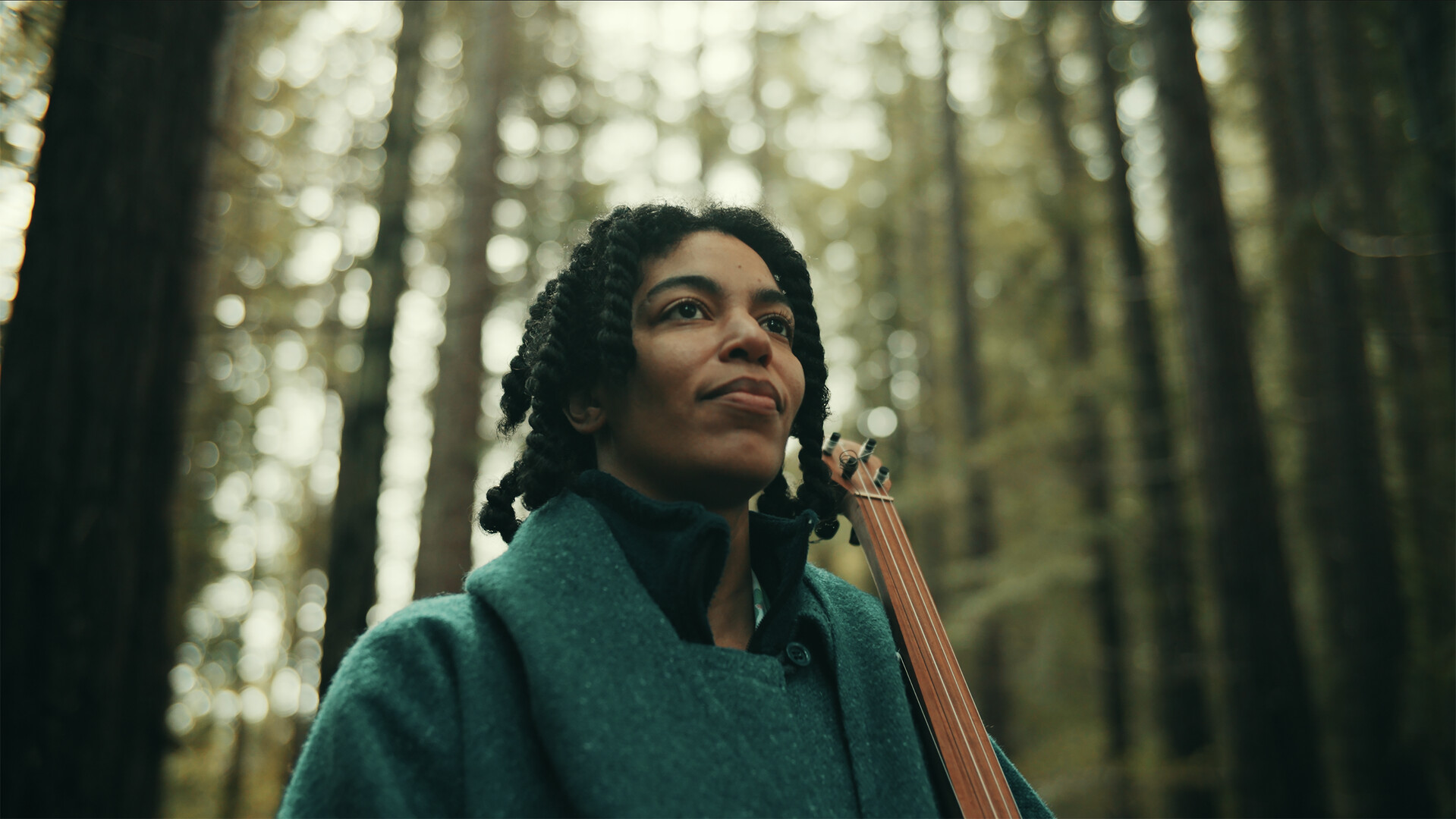
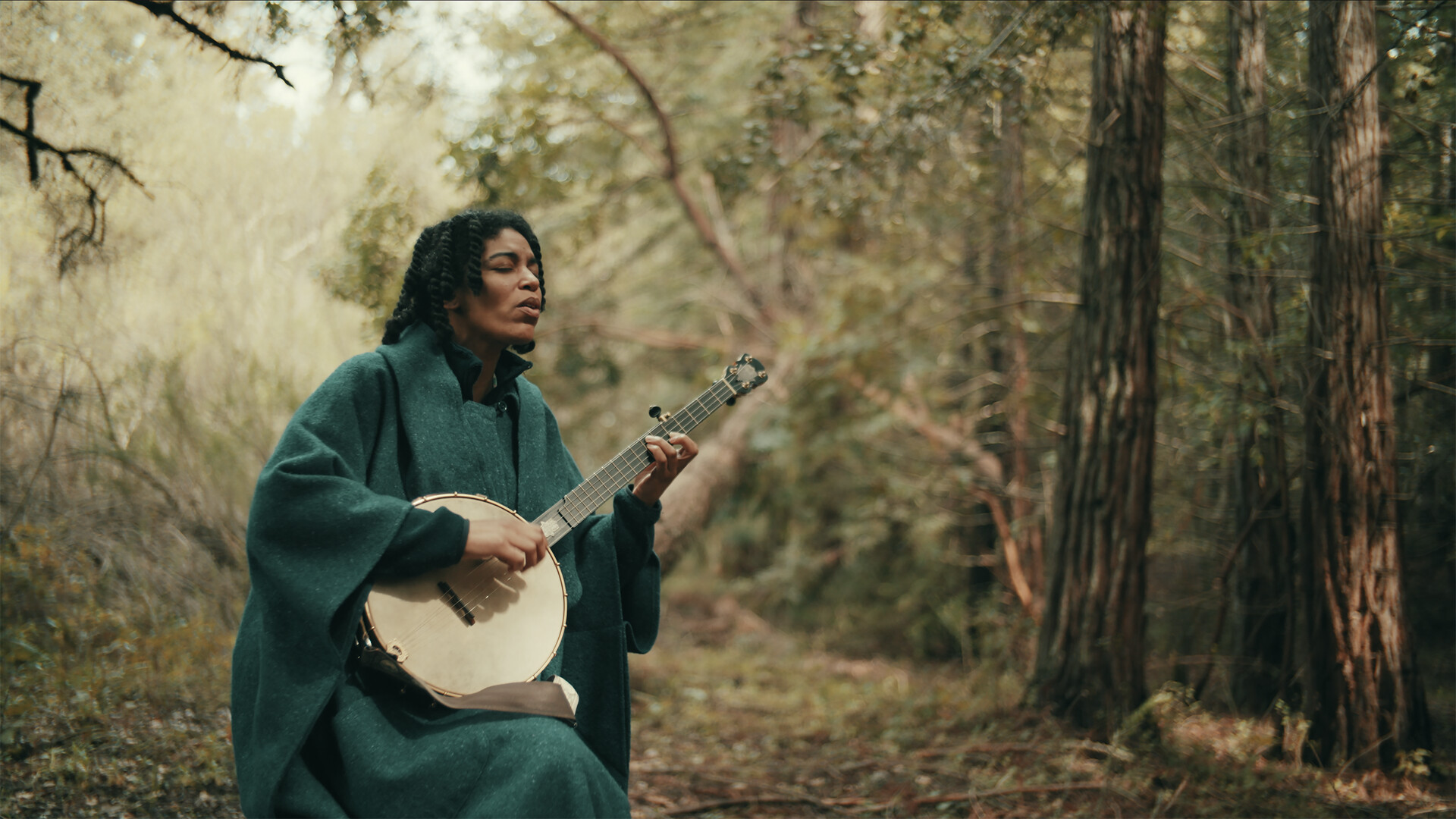
A musician and community organizer is spearheading a movement to reclaim the banjo’s Black past from the root, by building banjos from scratch out of earth materials, a continuation of a land-based practice of their diasporic ancestors.
Director Statement
How do we reclaim something that has been lost? That is a question that artist Hannah Mayree is on a lifelong journey to answer through their work with the banjo. The banjo is seen as quintessentially American. But its process of adapting to American culture involves a violent history of enslavement, minstrelsy, and appropriation. These days, however, a burgeoning movement is underway to reclaim the banjo’s Black roots. Hannah is doing just that — reclaiming the banjo from the root — not only symbolically, but literally. They are spearheading a movement to build banjos from scratch, from the roots of the earth.
Hannah and I have been connected through social media for several years, after I had been on an internet deep dive about banjo history. I had watched a documentary on country music that briefly mentioned the origins of the banjo, and upon learning that information, I felt that a part of myself had been ripped away from me. As a Black woman, I often move through life with daily reminders of my ancestry, but without the knowledge that they are part of me. Discovering the banjo’s origins led me to feel the pain of that loss, but also sparked a deep curiosity in me.
And with that curiosity, I began searching for those movements that were doing the work to bring Black visibility back to the banjo. That’s how I learned about the Black Banjo Reclamation Project, which Hannah founded. And through chatting online, we discovered some commonalities: we are both from California, both from multicultural backgrounds, and both have a deep commitment to narrative healing within the Black diaspora — Hannah through the banjo, and I through filmmaking. Our work speaks to each other. And our real collaboration began once we started working on this project.
I like to call Hannah a “community-made” artist because every step they have made as an artist has been done so in community. They learned to play banjo through jam sessions while traveling, they learned to build banjos through peers and community members, and now they’re spearheading a movement that extends that knowledge out to other Black people. And in doing so, they center the banjo as a vehicle for healing and ancestral nurturing for the Black community.
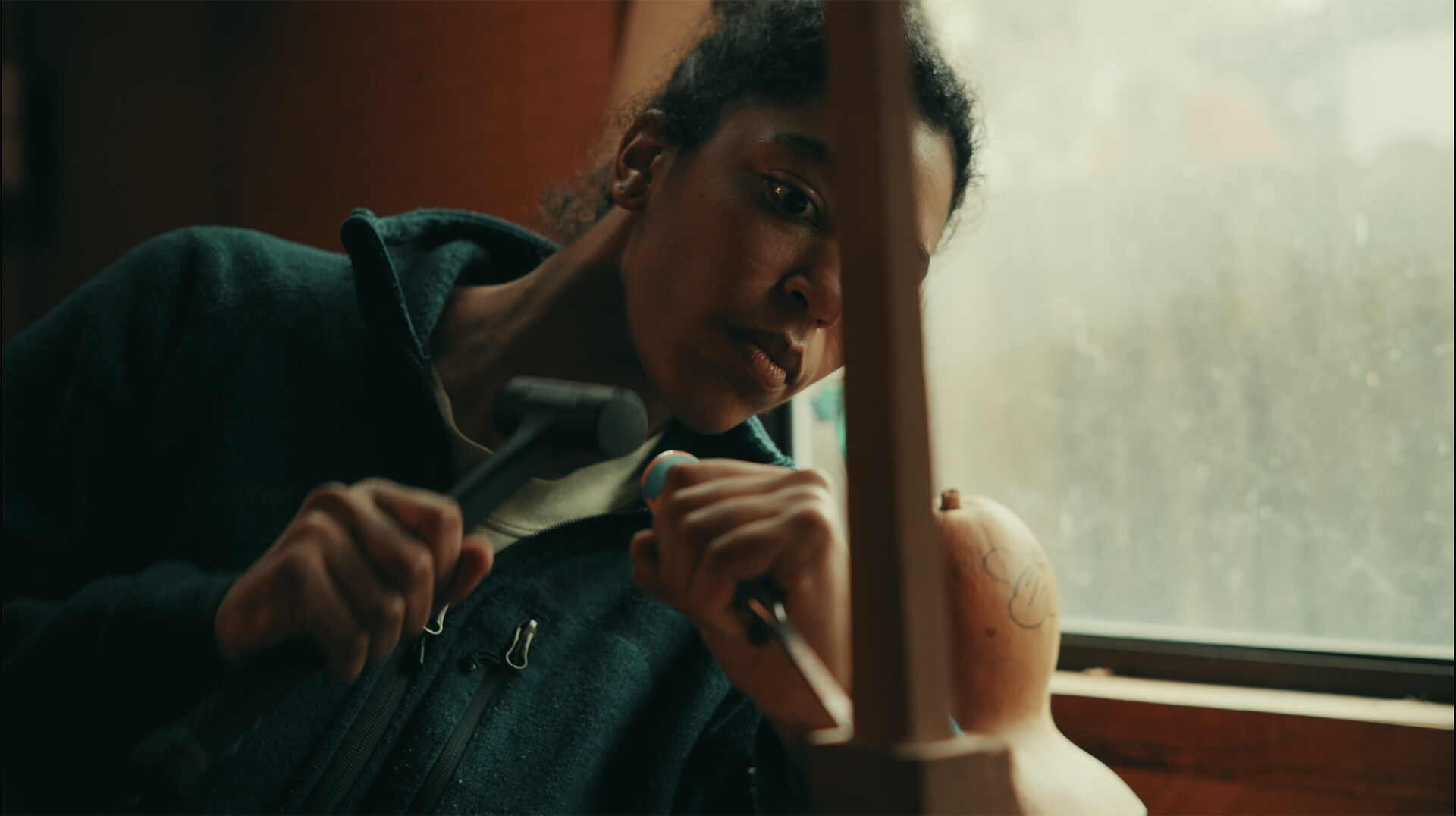
The banjos that Hannah builds are made from gourds, wood and raw goat-hide: all earthen materials. They make these banjos with a gourd base because gourds were what our Afro-diasporic ancestors used to build string instruments, both on the continent and once they were forcibly relocated to the Americas. Hannah revives these earth-based practices in their banjo work — they plant gourds from seeds in their yards, source gourds from local farms, and source the wood for the necks from local trees in the region — creating an ecosystem of self-determination and reparations. Once banjos are built, or repaired, they are then distributed to members of the Black community, who then continue to champion this cultural stewardship in their own communities.
In our film, we situate the gourd as a visual metaphor for foundations and beginnings. We filmed at a gourd farm in Southern California right at sunrise. We captured the morning light as a representation of beginnings — the beginnings of the banjo, the beginnings of Hannah’s journey and the beginning of our film.
During filming, we followed Hannah through a few major feats in their artist trajectory. As a musician, they are working on a new album and have performed at venues throughout the country — in the film, we highlight their performance at the inaugural Biscuits and Banjos Festival in Durham, North Carolina. As a crafter, they hosted their ninth banjo build workshop-— this time in their home region of northern California — as part of their long-term project of hosting banjo builds across the country over the past several years. It is their lifelong goal to continue honing their lutherie craft and create the next legion of Black luthiers and instrument makers in this country. We are excited to accompany and collaborate with Hannah in this facet of their journey as they continue to create Afro futures.
Director Biography
Ebony Bailey is a documentary filmmaker who focuses on cultural intersections and diaspora. Her films have screened at film festivals worldwide, including the American Documentary Film Festival, Pan African Film Festival, Urbanworld and Shorts México. Ebony’s work has been broadcast on PBS and Noticias Telemundo and has received support from Firelight Media, Latino Public Broadcasting and the National Endowment for the Humanities. She is a member of Brown Girls Doc Mafia and the International Documentary Association.

Plays in

All Eyes on Her – Shorts Program
Funny, fierce, and full of heart—this collection of shorts celebrates women taking charge, breaking rules, and telling it…
Dates & Times
All Eyes on Her - Shorts Program
Digital Gym Cinema
November 8, 2026
5:00 pm
Digital Gym Cinema
November 8, 2026
7:00 pm
